
ACM BALTIMORE CHAPTER 2ND SEMINAR
Wednesday, April 20, 2022
CALL FOR PARTICIPATION
ACM BALTIMORE CHAPTER SEMINAR 2022
REMOTE AND IN PERSON
JOHNS HOPKINS UNIVERSITY APPLIED PHYSICS LAB, USA
5:00 PM – 8:00 PM (EST), Wednesday, APRIL 20, 2022
In casinonic casino play online is not easier. In order to bet at casinonic casino online, players must meet certain requirements. First, players must be of legal age and be able to provide a valid ID. In addition, players must have a registered account and go through the necessary verification process. Read more on the website.
ACM, the Association for Computing Machinery, is the world’s largest educational and scientific computing society, uniting educators, researchers and professionals to inspire dialogue, share resources and address the field’s challenges. The Baltimore ACM Professional Chapter was recently formed to help organize monthly seminar, professional meetings and networking events, professional development workshops, and provide collaboration opportunities with computing organizations and research labs in the DC, Maryland and Virginia area. ACM Baltimore Chapter is scheduled to organize the second seminar on Wednesday, April 20, 2022.AGENDA
| 5:00 PM – 5:30 PM EST | Networking and Refreshment |
| 5:30 PM – 5:50 PM EST | Welcome Address and ACM Baltimore Chapter Update |
| 5:50 PM – 6:40 PM EST | Invited Talk: “35 Years of Protecting the Internet”, a historical retrospective (Prof. Steven M. Bellovin, Columbia University) |
| 6:40 PM – 6:50 PM EST | BREAK |
| 6:50 PM – 7:40 PM EST | Invited Talk: AI for Cybersecurity (Dr. Anupam Joshi, University of Maryland, Baltimore County (UMBC) |
| 7:40 PM – 8:00 PM EST | Future plans and Vote of Thanks |
ON-SITE VENUE
Johns Hopkins University Applied Physics Laboratory
(JHU/APL), 201-117, 11091 Johns Hopkins Road,
Laurel, MD 20723
Visitor’s Information
REMOTE/ ONLINE ACCESS (Using Zoom)
Remote attendees can join the seminar via online using the Zoom link given below:

LINK: https://jhuapl.zoomgov.com/j/1607818310?pwd=blp5YWptSFdkY2JRWHJldGhVU1E1dz09
TINY URL: bit.ly/ACM-Baltimore-20April
ID: 160 781 8310 PASSWORD: 468284
On behalf of ACM Baltimore Chapter
Ashutosh Dutta, Chair, ACM Baltimore Chapter
Contact: Ashutosh.Dutta@jhuapl.edu or +1 908-642-8593
More details about Baltimore ACM Chapter can
be found: https://baltimore.acm.org
“35 Years of Protecting the Internet”, a historical retrospective
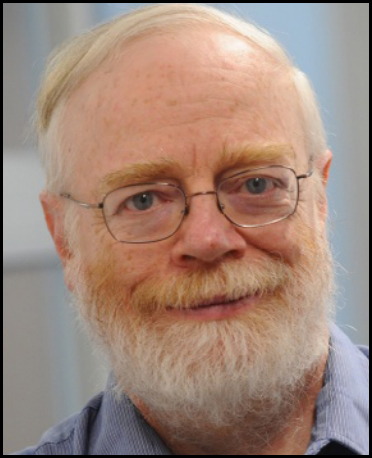
Steven M. Bellovin is the Percy K. and Vida L. W. Hudson Professor of Computer Science at Columbia University, member of the Cybersecurity and Privacy Center of the univer- sity’s Data Science Institute, and an affiliate faculty member at Columbia Law School. Bellovin does research on security and privacy and on related public policy issues. In his copious spare professional time, he does some work on the history of cryptography. He joined the faculty in 2005 after many years at Bell Labs and AT&T Labs Research, where he was an AT&T Fellow. He received a BA degree from Columbia University, and an MS and PhD in Computer Science from the University of North Carolina at Chapel Hill. While a graduate student, he helped create Netnews; for this, he and the other perpetrators were given the 1995 Usenix Lifetime Achievement Award (The Flame). He has also received the 2007 NIST/ NSA National Computer Systems Security Award and has been elected to the Cybersecurity Hall of Fame. Bellovin has served as Chief Technologist of the Federal Trade Commission and as the Technol- ogy Scholar at the Privacy and Civil Liberties Oversight Board. He is a member of the National Acad- emy of Engineering and has served on the Computer Science and Telecommunications Board of the National Academies of Sciences, Engineering, and Medicine. In the past, he has been a member of the Department of Homeland Security’s Science and Technology Advisory Committee, and the Technical Guidelines Development Committee of the Election Assistance Commission.
AI for Cybersecurity
Two technologies are growing in importance — AI and Cybersecurity. Not only are they individually
important, their intersection is also growing in importance. For instance, large data is now available
to detect attacks. These come from not just the traditional sensors like those on networks and hosts,
but also from textual sources such as web fora, dark web, and threat intelligence feeds. AI can help us
make sense of these large volumes of data to support SoC analysts in their tasks. However, challenges
remain, such as how to resolve potentially inconsistent information from distributed sensing elements
of a defensive enterprise. In this talk, we will present our research in this space, as well as new avenues
that we are exploring in this area.
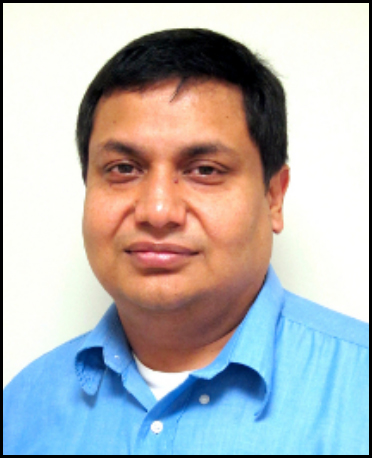
Anupam Joshi is the Oros Family Professor and Chair of Computer Science and Electrical Engineering Department at the University of Maryland, Baltimore County (UMBC).
He is the Director of UMBC’s Center for Cybersecurity. He is a Fellow of IEEE. Dr. Joshi
obtained a B.Tech degree from IIT Delhi in 1989, and a Masters and Ph.D. from Purdue
University in 1991 and 1993 respectively. His research interests are in the broad area
of networked computing and intelligent systems. His primary focus has been on data
management and security/privacy in mobile/pervasive computing environments, and
policy driven approaches to security and privacy. He is also interested in Semantic
Web and Data/Text/Web Analytics, especially their applications to (cyber) security and healthcare.
He has published over 275 technical papers with an h-index of 87 and over 28500 citations (per Google scholar), been granted nine patents, and has obtained research support from National Science
Foundation (NSF), NASA, Defense Advanced Research Projects Agency (DARPA), US Dept of Defense
(DoD), NIST, IBM, Microsoft, Qualcomm, Northrop Grumman, and Lockheed Martin amongst others.
More details about Baltimore ACM Chapter can be found: https://baltimore.acm.org
